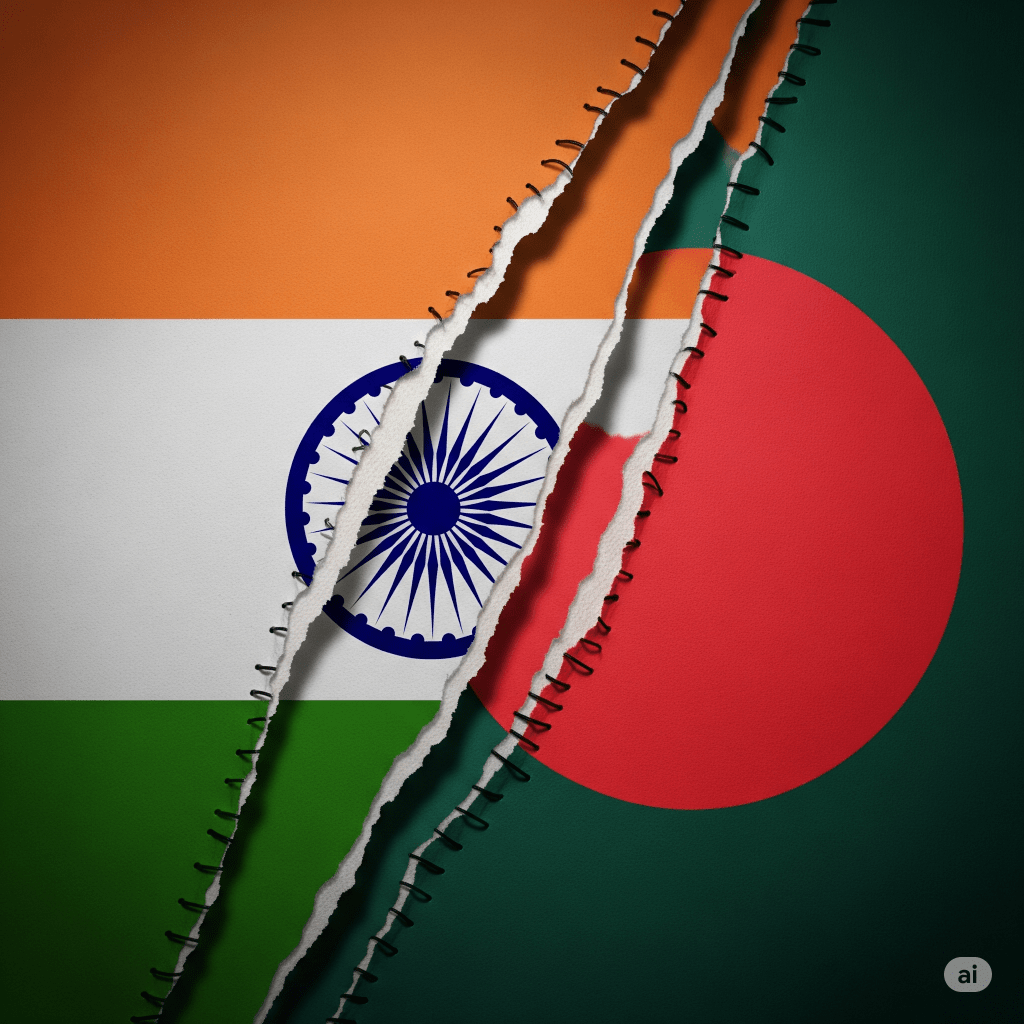
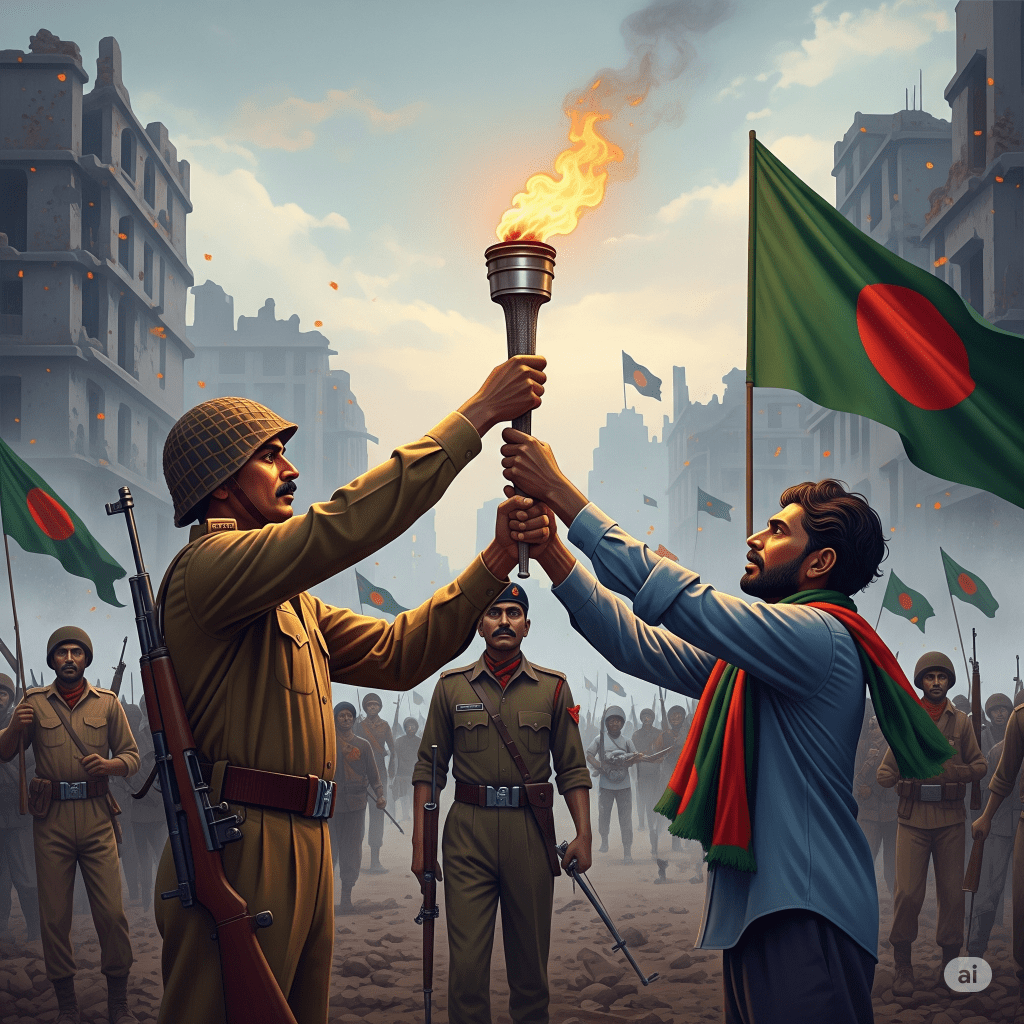
In December 1971, Indian armed forces entered East Pakistan, catalyzing the birth of Bangladesh—a nation forged through bloodshed, resistance, and the intricate dance of geopolitics. India’s intervention was framed as a humanitarian necessity, prompted by the Pakistani military’s crackdown that killed an estimated 300,000 people and the unprecedented influx of over ten million refugees into Indian territory. For India, this episode remains a defining moment of moral clarity and strategic resolve, a time when it stood up to the combined pressures of the United States and China, both of whom backed Pakistan. Yet, for Bangladesh, the memory of 1971 is more complex, evolving, and sometimes contested. Today, India’s expectation of enduring gratitude often clashes with Bangladesh’s determination to assert its own agency and narrative sovereignty.
This piece explores how these competing memories have taken shape, the psychological and political forces behind them, and how regional, economic, and global realities further complicate the relationship.
Narrative Theory and the Power of Political Storytelling
Narrative theory, as applied to politics, emphasizes that the stories nations tell about themselves are not just passive recollections of facts but active constructions that shape identity, legitimacy, and collective memory. Fred I. Greenstein put it succinctly: “Narrative control is integral to political legitimacy.” Whoever frames the story often shapes political reality, influencing both domestic and international audiences.
Competing Narratives: Liberation, Gratitude, and Self-Authorship
India’s official memory of 1971 is one of moral heroism and strategic sacrifice. The war is remembered as a just cause, a righteous intervention to halt genocide and support the Mukti Bahini, the Bangladeshi guerrilla fighters at the forefront of the liberation struggle. Prime Minister Indira Gandhi’s government bore immense costs, including the lives of nearly 3,900 Indian soldiers and an estimated $2.5 billion in direct war expenditures (in 1971 USD), all while resisting diplomatic isolation and pressure from the Nixon administration in the United States. This narrative remains deeply embedded in Indian national pride and is emotionally charged; the expectation is that Bangladesh will eternally recognize India as its liberator. However, this expectation can easily slip into what narrative theorists call a “grand narrative“—a dominant story that seeks to shape subordinate identities and behaviors. In this case, India’s narrative risks becoming a form of moral imperialism, where past help becomes a permanent political IOU.
In contrast, Bangladesh’s own story about 1971 has shifted over time. While the importance of Indian support is acknowledged, the focus increasingly falls on homegrown resistance and the sacrifices of the Bangladeshi people themselves. For many in Bangladesh, India’s intervention is now seen less as an act of altruism and more as a move driven by strategic self-interest. This reframing serves a vital purpose for Bangladesh: it allows the country to claim narrative sovereignty, crafting its own origin story free from external claims and expectations. Governments in Dhaka, especially those seeking to distance themselves from New Delhi, have found this narrative useful in reinforcing national pride and political legitimacy.
Internal Political Dynamics and Media Influence
The internal politics of both countries dramatically distort how history is manipulated and remembered. In Bangladesh, the ruling Awami League and the opposition Bangladesh Nationalist Party (BNP) cynically exploit the 1971 narrative, bending the facts to fit their desperate need for legitimacy. Meanwhile, in India, the ever-shifting landscape of governments—from the Congress era to the Bharatiya Janata Party (BJP)—has led to a fluctuating stance on Bangladesh, with jingoistic rhetoric often inflating demands for gratitude and acknowledgment. The media in both nations, both traditional and social, wield immense influence over public perceptions, aggressively pushing nationalist agendas and, alarmingly, spreading falsehoods that only serve to deepen animosities and mistrust.
The Teesta River Dispute: Numbers, Stakes, and Political Symbolism
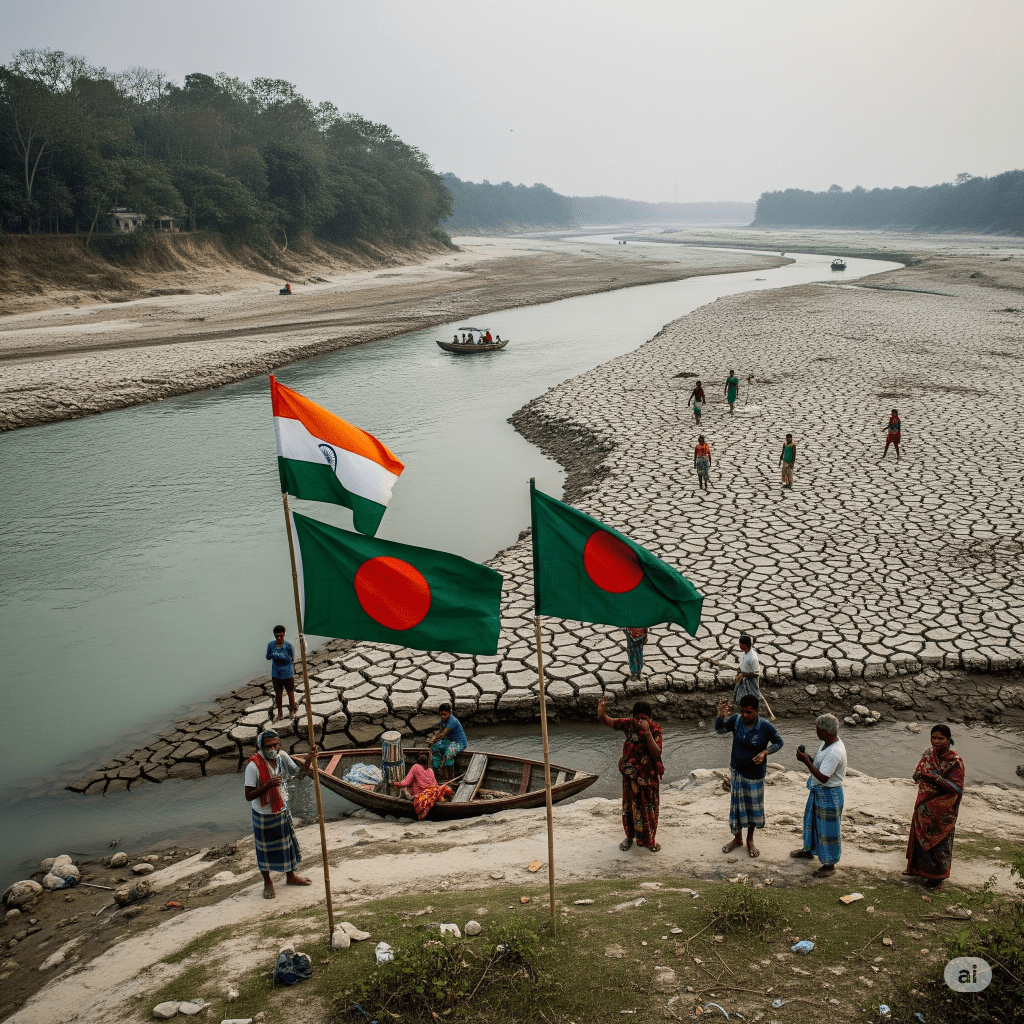
Few issues today so powerfully illustrate the intersection of narrative, legitimacy, and sovereignty as the Teesta River dispute. The Teesta, which originates in Sikkim, flows through West Bengal in India before entering Bangladesh, is vital for both countries’ agriculture and livelihoods. For more than four decades, the two neighbors have failed to reach a permanent agreement on sharing its waters, especially during the dry season when water scarcity is most acute.
The first temporary deal, struck in 1983, allocated 36% of the dry-season flow to Bangladesh, 39% to India, and left 25% undecided. This was never formalized as a permanent treaty. In 2011, a long-term agreement was nearly finalized, promising Bangladesh 37.5% of the Teesta’s dry-season flow, but it collapsed at the last moment due to opposition from West Bengal’s Chief Minister.
Today, the Teesta dispute is not just about water—it has become a lightning rod for political rhetoric and a symbol of unresolved grievances. In February 2025, the Bangladesh Nationalist Party (BNP) led a 48-hour nonstop sit-in along a 130-kilometre stretch of the river, demanding a fair share of water and the implementation of the Teesta Master Plan. Experts warn that without guaranteed water availability and multilateral cooperation, any plan will remain ineffective.
The dispute is further complicated by domestic politics in both countries, with the interests of local communities and the ecological health of the river often sidelined in favor of national and regional power plays.
Environmental and Humanitarian Dimensions
Shared environmental and humanitarian challenges further complicate the relationship. Both countries are highly vulnerable to climate change. The Rohingya refugee crisis adds another layer of complexity. Bangladesh’s decision to host over 1.1 million Rohingya fleeing persecution in Myanmar has placed enormous strain on its resources. India’s position on the crisis, and its own approach to refugees and migration, has significant implications for regional diplomacy and public sentiment.
The Politics of Citizenship: NRC and CAA’s Impact on India-Bangladesh Relations
The introduction of the Citizenship Amendment Act in 2019 and the ongoing controversies surrounding the National Register of Citizens have significantly complicated the politics of identity and belonging in the region.
The Citizenship Amendment Act, by offering citizenship to non-Muslim refugees from neighboring countries including Bangladesh, has been widely criticized for its religious selectivity. At the same time, the National Register of Citizens process in Assam has stoked fears of disenfranchisement and statelessness, particularly among Bengali-speaking Muslim populations whose families have longstanding historical ties to the region.
These developments echo deeper historical anxieties about migration, citizenship, and national identity—anxieties that have shaped India and Bangladesh’s relationship since Partition and the 1971 Liberation War. While Bangladesh officially rejects any notion that its citizens are illegal migrants in India, India’s internal debates around NRC and CAA fuel diplomatic tensions.
Regional and Global Influences: Beyond Bilateral Ties
The relationship between India and Bangladesh cannot be understood in isolation from the broader context of South Asian and global geopolitics. Bangladesh’s increasing economic and infrastructural engagement with China, including more than $2.1 billion in infrastructure investments since 2016, reflects a deliberate strategy to balance Indian influence and avoid overdependence on a single neighbor.
The shadow of Pakistan, too, continues to loom over the region. The legacy of the Cold War, when India aligned with the Soviet Union and the United States and China supported Pakistan, still echoes in today’s shifting alliances and diplomatic maneuvering.
Security Concerns and Bilateral Frictions
Security issues have been a persistent source of tension between India and Bangladesh. Islamist militant groups such as Jamaat-ul-Mujahideen Bangladesh (JMB) have used Bangladeshi territory to plan attacks in India. While the Awami League government in Bangladesh has generally cooperated with India on counter-terrorism, fragile state control and the potential for radicalization remain real concerns in New Delhi. Border disputes are another flashpoint, with frequent skirmishes between India’s Border Security Force (BSF) and Bangladesh’s Border Guard Bangladesh (BGB) exacerbating mistrust.
Economic Interdependence and Challenges
Despite frequent political tensions, India and Bangladesh are deeply economically intertwined. Bilateral trade reached $18 billion in 2023, but Bangladesh continues to run a trade deficit of over $10 billion with India, fueling perceptions of economic dependency. Labor migration is another important aspect of the relationship, with an estimated 1.5 million Bangladeshis working in India and sending vital remittances home. Energy cooperation has also become a cornerstone of bilateral ties, with India supplying up to 1,160 megawatts of electricity to Bangladesh.
Conclusion: Who Owns History?
At its heart, the India-Bangladesh relationship is a contest over who gets to tell the story of 1971 and what that story means today. Narrative theory reminds us that these stories are not neutral; they are strategic, performative, and deeply political. The ongoing deadlock over the Teesta River is not just a technical water-sharing issue but a symbol of unresolved power struggles, competing narratives, and the enduring quest for sovereignty on both sides. India’s narrative of moral heroism and Bangladesh’s quest for narrative sovereignty reflect deeper struggles over identity, power, and legitimacy. In the realm of geopolitics, memory is not just a tribute to the past—it is a tool for shaping the future. Understanding this fractured gratitude is essential for moving toward a future where shared history can become a foundation for genuine partnership, rather than a source of perpetual grievance.
Discover the Threads that Shape Our World

 Woven Histories: Exploring the Tapestry of the Past
Leave a comment